Want to be in the loop?
subscribe to
our notification
Business News
ADVICE FOR FOREIGN HOME OWNERSHIP
According to the Housing Law, the condition is now so relaxed that a foreigner who lawfully enters Vietnam can be eligible to own residential housing. As such, the buyer needs to prove that his entrance is legally permitted.
Second, it is advisable that the buyer should keep a track record for the money he brings to Vietnam for buying the house. This would make it easier for the buyer to remit the money back after selling the house at a later date. For this purpose, he should open an account at a bank in Vietnam to which the money will be transferred, and from which the payments for the house should be made. In case the money is his salary or income earned from working or doing business in Vietnam, he should keep documents that track his/her income.
Third, the buyer should get to know which property projects that he or she is permitted or not permitted to buy in order to avoid future risks. Please note that foreign buyers are only permitted to buy houses from new housing development projects, not in existing residential quarters. This job is not difficult for foreign buyers if he or she consults with a reputable property agent such as Savills or Collier.
Fourth, foreigners should make sure that the property developers they are contracted with are qualified to sign housing sale and purchase agreements with buyers. In principle, the property developers are allowed to enter into housing sale and purchase agreements once (i) the housing project is properly approved; (ii) the foundation work of the house is completed, and (iii) the terms and conditions of the agreement for selling a condo have been registered at the Vietnam Competition Authority (under the Ministry of Trade and Industry). An agreement may be void if failing to meet one of these conditions, and thus, the interests of the buyer may not be properly protected.
Fifth, buyers should pay careful attention to the implementation of a housing sale agreement with housing development projects, since this may be not similar to the transaction practice in the buyer’s native country. For example, in Vietnam the housing developers usually do not give notice to the buyer making payments under the contract, and so it is the obligation of the buyer to follow the payment schedule as contracted. This ambiguity may lead to late payments by the buyers, which may result in late payment penalties and/or early termination of contract by the seller (housing developer). Buyers may seek advice from lawyers to avoid such risks.
Sixth, according to the Housing Law, foreign housing owners have the same full rights as Vietnamese over the house, such as the right to lease, donate, make a capital contribution, or bequest to others, etc. However, it should be noted that the foreign owner can exercise these rights only after he or she has obtained a “land use right certificate and/or property ownership” for the real estate. Therefore, in the respective contract, the obligation to apply for the certificate of ownership and/or the land use rights by the seller should be clearly stipulated. Also, when leasing the real estate, the foreigner owners must register the lease agreements with the local government (district-level administration committees), and properly declare his/her income tax for the earned rents. By complying with these requirements, the foreign buyers’ incomes will be treated as legitimate income which can be remitted abroad. In addition, when renting out a house, it is also required that the owners must register the temporary residence of tenants with relevant local authorities. Currently, it is still not clear how foreigners, as home-owners, carry out this registration procedure. Some foreigners are afraid that if they do not regularly live in Vietnam, they cannot fulfil this obligation. Actually, this difficult task may become easier if the foreign owners can engage a real estate management company to take care of this, and on behalf of the foreign owners, perform the management and administrative procedures involved.
Seventh, if the foreign owners no longer want to own the house, what can they do? Can they sell it to other foreigners or Vietnamese? Yes, they can, according to the Housing Law. However, currently there is no clear guidance from the State Bank of Vietnam on how foreign owners can remit the sale proceeds from selling the house. However, my opinion is that if they can prove the money that they used to buy the house is from legal sources and relevant taxes have been fully paid, he or she is surely permitted to transfer their gains abroad. Again, to navigate through such procedures, buyers should consult with a lawyer specialising in real estate.
By Attorney Tran Thai Binh-Head of Real Estate Practice Group of LNT & Partners with more than 15 years in real estate practice. Its contents do not constitute legal advice. For more information, please contact the lawyer via email: binh.tran@LNTpartners.com
Source: VIR
Related News

INFRASTRUCTURE / CONSTRUCTION / LOGISTIC / PORT
VIỆT NAM-CAMBODIA TRADE GATHERS PACE TOWARDS $20 BILLION TARGET
Trade between Việt Nam and Cambodia continues to grow, remaining a bright spot and a key pillar of bilateral cooperation as the two countries aim to raise two-way trade to US$20 billion in the coming years. After setting a record of more than $11.3 billion last year, bilateral trade reached about $8.7 billion in the first eight months of this year, up 8.3 per cent year on year.
TECHNOLOGY
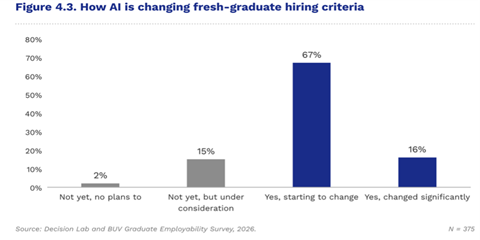
AI BEGINNING TO RESHAPE RECRUITMENT CRITERIA
Digital literacy is the only capability area in which fresh graduates meet employers’ expectations, according to a new report. Yet, it is also the standard rising fastest, as businesses increasingly expect new hires to use AI effectively in the workplace. Some 83 per cent of employers say AI has changed, or is beginning to change, their hiring criteria, while 94 per cent report higher expectations for digital and AI capabilities than they had two to three years ago.

INFRASTRUCTURE / CONSTRUCTION / LOGISTIC / PORT
ĐÀ NẴNG GREEN-LIGHTS US$105 MILLION THAI DEVELOPMENT DEAL
The central city has approved an investment proposal by Thailand’s WHA Group to develop infrastructure for the 400ha WHA Đà Nẵng Industrial Park project on two communes of Thăng Bình and Đồng Dương, with an investment of more than VNĐ2.7 trillion (US$105 million). The city said it approved WHA Industrial Development International's status as an investor in the project, which is expected to take place between 2027 and 2034.

VIETNAM ECONOMY INVESTMENT
MOBILE PHONE EXPORTS RISE 20% TO $51.8 BILLION IN FIRST NINE MONTHS
Exports of mobile phones and components rose 20 per cent year-on-year to nearly US$51.8 billion in the first nine months of 2026, with China, the US and Republic of Korea accounting for more than half of the total. Shipments to the three markets reached a combined $26.18 billion, or 50.6 per cent of total exports of the product group during the period, according to data from the Vietnam Department of Customs under the Ministry of Finance.

VIETNAM ECONOMY INVESTMENT
FRUIT AND VEGETABLE EXPORTS POISED TO HIT $10 BILLION IN 2026
Fruit and vegetable exports are on track to reach nearly US$10 billion in 2026, after rising 19.9 per cent year on year to nearly US$7.4 billion in the first nine months, driven by strong seasonal demand and abundant tropical fruit supplies. The Ministry of Agriculture and Environment said the growth reflected stronger international demand for fresh produce and processed agricultural products.
GARMENT / TEXTILE
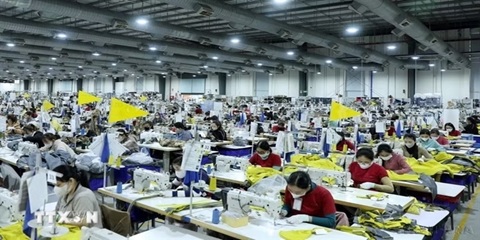
TEXTILE EXPORTS FACE DUAL CHALLENGES OF SUSTAINING ORDERS AND BOOSTING EFFICIENCY AMID GROWING COMPETITION
Data shows that the textile and garment sector maintained its growth momentum in the first nine months of this year. The industry's total export turnover reached an estimated US$35.721 billion in the first nine months of this year, up 3.3 per cent year-on-year. Despite posting encouraging export figures, Vietnamese textile and garment enterprises continue to navigate unpredictable market variables.
Events Sponsors






















